
To tell the truth, grocery bills are out of control. It appears that, whether you are feeding a family of five or all by yourself, the checkout total seems to creep higher every single week.
The good news? Learning how to save money on groceries doesn’t mean surviving on rice and beans or clipping coupons for three hours every Sunday. Having a couple of clever habits, you can significantly reduce your grocery bill and still eat well.
Here’s a practical, no-fluff guide to help you do exactly that.
Plan Your Meals Before You Ever Step Into a Store
This is the single biggest difference between people who overspend and people who don’t. Walking into a grocery store without a plan is like walking into a casino without a budget — the odds are not in your favor.
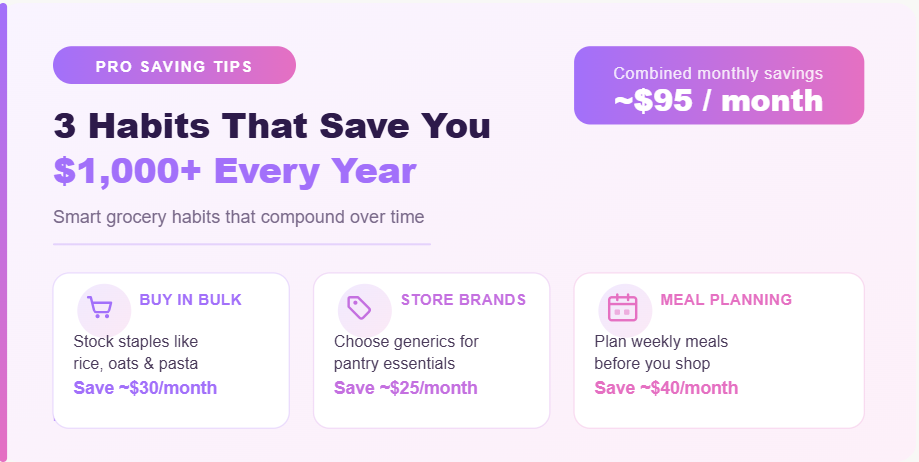
Take 10-15 minutes a week to map out what you will be eating in terms of breakfast, lunch and dinner. And then compose your shopping list based solely on that plan. When you realize you have pasta on Wednesday and a stir-fry on Thursday, you will not need to buy random things just in case but instead you will know you will be making pasta on Wednesday and a stir-fry on Thursday.
Meal plan also assists you to exhaust what you already have in your house before you can purchase more. First check your pantry and fridge. You will be amazed at how many times already a full dinner is lurking in there.
How to Save Money on Groceries: Shop with a List and Stick to It
A shopping list is not a reminder, it is a boundary. It prevents you from adding an extra bag of chips or a fancy cheese to the cart since it looked good at that time.
Write your list in order of section of the store produce, dairy, meat, dry goods. This keeps you bustling efficiently and it keeps the temptation of wandering about aisles where you do not actually need such items at this time.
Another tip: do not go shopping when you are hungry. It is like a cliche in that it is true. The research that has always been carried out has indicated that a person can make more impulsive, high calorie, and high cost purchases when he or she is hungry. Eat a snack on your way.
Embrace Store Brands (Your Wallet Will Thank You)
Here’s a truth that the big-name brands don’t want you to think about too hard: store-brand products are often made in the exact same facilities as name-brand ones. The difference is packaging and price — sometimes 20–40% less.
Attempt to use store brands of items like:
– Canned tomatoes, beans and vegetables.
– Pasta, rice, and oats.
– Butter, milk and eggs.
– Baking ingredients and spices.
– Cleaning materials and toiletries (and you were there at the same time)
You’ll probably discover that 80 percent of the time you will not notice the difference. With the other 20% where you have a real preference, use the brand that you enjoy. However, first have a decent go at the store version.
Buy in Bulk — But Only the Right Things
Bulk purchasing may help you save the actual money, but only when it is done intelligently. What people get into is purchasing large amounts of things that spoil before they can be used up and thus you are not saving but wasting.
Candidates to buy in bulk:
– Dried grains, legumes, pasta, and rice.
– Proteins and frozen vegetables.
– Cleaning supplies and paper products.
– Oils, vinegars, and condiments that you are used to using on a regular basis.
Do not buy fresh food, dairy or bread in large quantities unless you are certain that you will consume it all before it goes to waste. And never again refer to the sticker price but to the unit price (price per ounce or per 100g) to ensure bulk is indeed the better deal.
Use Cashback Apps and Loyalty Programs
There are apps that literally pay you to shop for groceries that you were already planning to shop for. Popular ones in the US include Ibotta, Fetch Rewards, and Rakuten, which offer cashback on individual products or across multiple stores.
The loyalty programs of most major grocery chains also provide individualized discounts, fuel points, or other digital coupons. Signing up only takes five minutes, and the savings would accrue faster than you would have imagined, particularly on some of the goods you buy on a weekly basis.
The trick is that you should utilize these programs and applications in a reactive, though not an active, manner. That is, do not purchase something simply because they have a coupon for it. Shop what you have on your list and then see whether or not there is a deal associated with what you have on your list.
Shop in Season and When to Visit Frozen
January strawberries aren’t necessarily costly, but they tend to have no flavor. Produce is at its cheapest and best when it’s in season locally. Dining with the seasons is not a food trend but just plain common sense.
Frozen is the best friend when something is out of season. Frozen vegetables and fruits are harvested and frozen at the optimum stage of ripeness, meaning that they are often healthier than the so-called fresh version that has been in a shipping container two weeks. And they are a quarter of the cost.
Plan meals based on what is on sale this week. When the chicken thighs have been reduced, prepare two chicken dinners. When zucchini is very cheap, identify three ways of putting it to use. Allow the sales to dictate your menu and not the other way around.
Less Food Waste - It's Like Free Money
On average, households end up wasting between 30 and 40 percent of the food they purchase. It is not only an environmental problem but a financial one as well. All the wilted heads of lettuce and out-of-date yogurt containers are money you wasted.
Some of the habits that do really count:
– Put away the produce in the store in such a way that it can last longer.
– Have your fridge properly arranged so that nothing is lost in the back part.
– Find a few of your use-it-up recipes (soups, stir-fries, frittatas, and grain bowls are great to make whatever is leftover)
– Freeze anything you will not use until it spoils.
By not wasting any more food, you are in effect giving yourself a grocery discount without changing what you purchase.
Conclusion:
Getting your grocery bill under control is less about sacrifice and more about intention. You don’t need to eat worse—you just need to shop smarter. Plan ahead, stick to your list, lean on store brands and seasonal produce, take advantage of deals you were already going to spend on, and stop letting food go to waste.
Start with just one or two of these changes this week. Even small shifts add up to hundreds of dollars saved over the course of a year. And once smarter shopping becomes a habit, you’ll wonder how you ever did it any other way.
Knowing how to save money on groceries isn’t a secret — it’s just a set of simple decisions made consistently over time. You’ve got this.
Leave A Comment